What are the carbon monoxide warning signs in a rowhouse?
Headaches, dizziness and flu-like symptoms that ease when you leave the house, plus condensation on the windows, are the warning signs UGI lists. If a CO alarm sounds or anyone feels sick, get everyone outside and call 911. In a rowhouse, a blocked, too-short or damaged chimney is a common source.
Philly Chimney & Fireplace Repair · November 6, 2026
Why rowhouses deserve extra attention
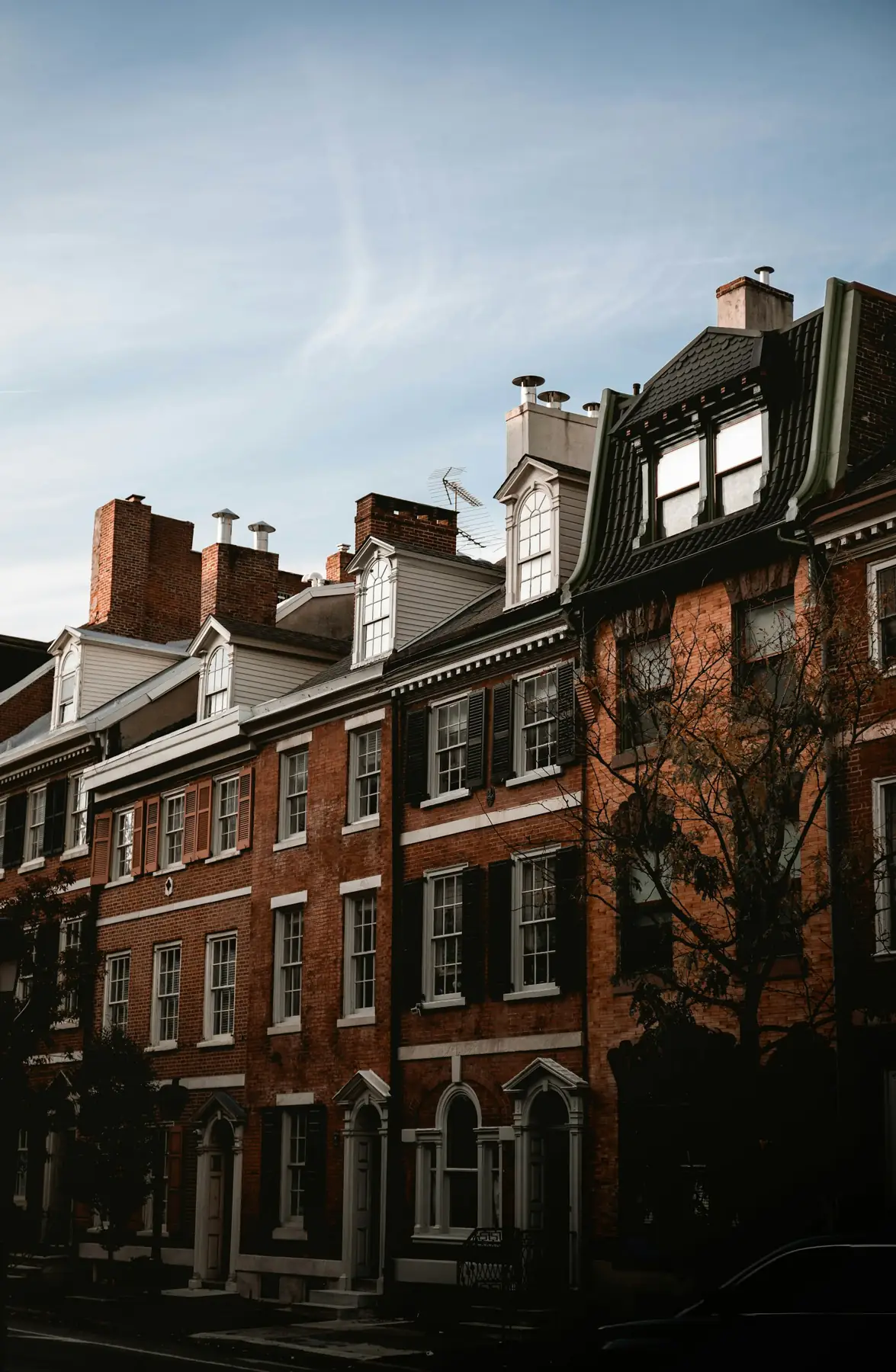
Most Philadelphia homes share walls. In the 2024 Census survey, 55.6% of homes in the city were rowhouses, twins or townhouses, compared with about 6% nationally, and about four in ten were built before 1940. The City's Philadelphia Rowhouse Manual notes that in older homes, party walls do not always extend all the way up to the roof.
Old stacks often carry more than one flue, and the house next door may have changed its heating, closed a fireplace, or built a floor higher since your chimney was last looked at. L&I's training slides on chimney extensions warn that a neighbor building above your chimney obstructs airflow and can lead to carbon monoxide poisoning.
Signs to watch for
UGI's safety pages list the physical signs. Use them together with a working alarm, never instead of one.
- Headaches, dizziness, nausea or flu-like symptoms that improve when you are away from home.
- Several people or pets in the house feeling unwell at the same time.
- Heavy condensation on the inside of windows.
- Soot or scorch marks around a furnace, boiler or water heater draft hood.
- A rust-streaked or crumbling chimney base, or debris falling into the cleanout.
- Construction next door that now stands above your chimney top.
What PGW, PECO and UGI tell customers
PGW, which serves Philadelphia, tells customers to have appliances, chimney and flue serviced regularly by a qualified technician, to keep a battery CO detector, change its batteries twice a year and replace it every five years, and never to cover appliance vent openings with mesh or netting. For suspected CO poisoning, PGW says call 911.
UGI tells customers that a malfunctioning appliance or a blocked chimney can cause a carbon monoxide build-up, and to check the connections to the chimney or flue for damage or corrosion.
For a gas smell, the three utilities agree on the order: leave first, then call. PGW's 24-hour line is 215-235-1212. PECO's brochure says to get at least 100 feet away and call 800-841-4141 from outside. UGI customers should move away and call 911 or 800-276-2722. PECO also points out that a methane detector is not a carbon monoxide detector.
What the City requires inside the house
L&I's Partners in Good Housing guide says existing one- and two-family homes in Philadelphia must have CO detection outside each sleeping area, plus inside a bedroom that has a fuel-burning appliance in it or its bathroom. Homes built before 2010 may use battery or plug-in alarms.
A real case, and the free inspection
Community Legal Services' June 2026 report describes a Graduate Hospital homeowner whose gas PGW shut off after finding elevated CO at her furnace. Her chimney had been sealed with plywood and tar during construction next door, and the required extension was never built.
Our inspection is free and runs top to bottom: the flue openings at the roof, each appliance connector, the clay tile we can see and the base of the stack, and you get photographs plus a written quote on each item that needs attention. A stainless cap to keep birds and debris out typically runs $200–$700, and nest removal $600–$1,500. If the furnace flue needs a liner, a stainless furnace or boiler liner typically runs $2,100–$3,800.
Answers
Follow-up questions
My CO alarm went off. Should I call a chimney company?
Not first. Get everyone outside and call 911, and call your gas utility if gas appliances are involved. Once the house is cleared and safe, have the chimney and flues checked.
Can my neighbor's chimney affect my house?
Stacks in rowhouses often hold more than one flue, and party walls in older homes do not always reach the roof. A damaged stack or a taller building next door can change how exhaust moves, which is why we look at the whole stack.
How often should a rowhouse chimney be checked?
The City's Rowhouse Manual says to have chimneys cleaned and inspected once a year, and PGW advises yearly checks of gas appliances.
Next up
Other Philly chimney notes
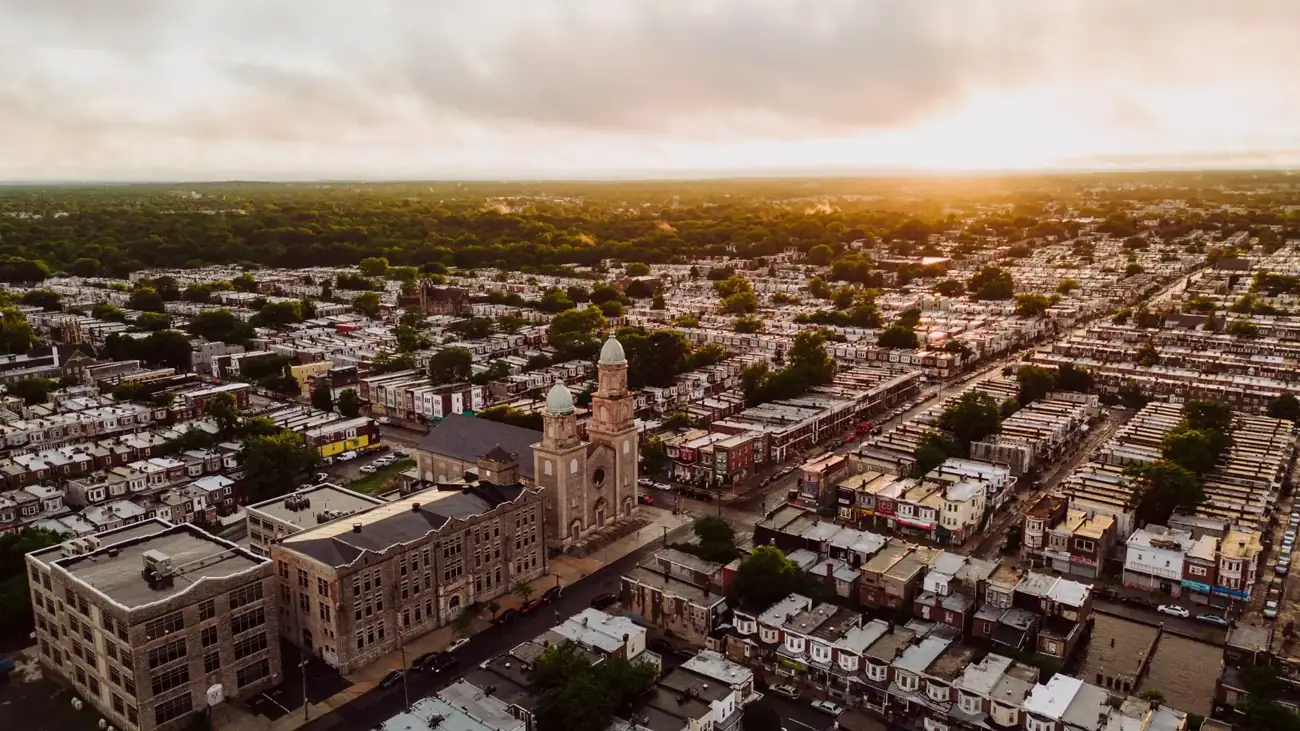 My neighbor built above my chimney. Who has to fix it in Philadelphia?When the house next door goes up a floor, your chimney can end up too short. What Philadelphia's B-3307.1 makes the builder offer, and when it's on you.
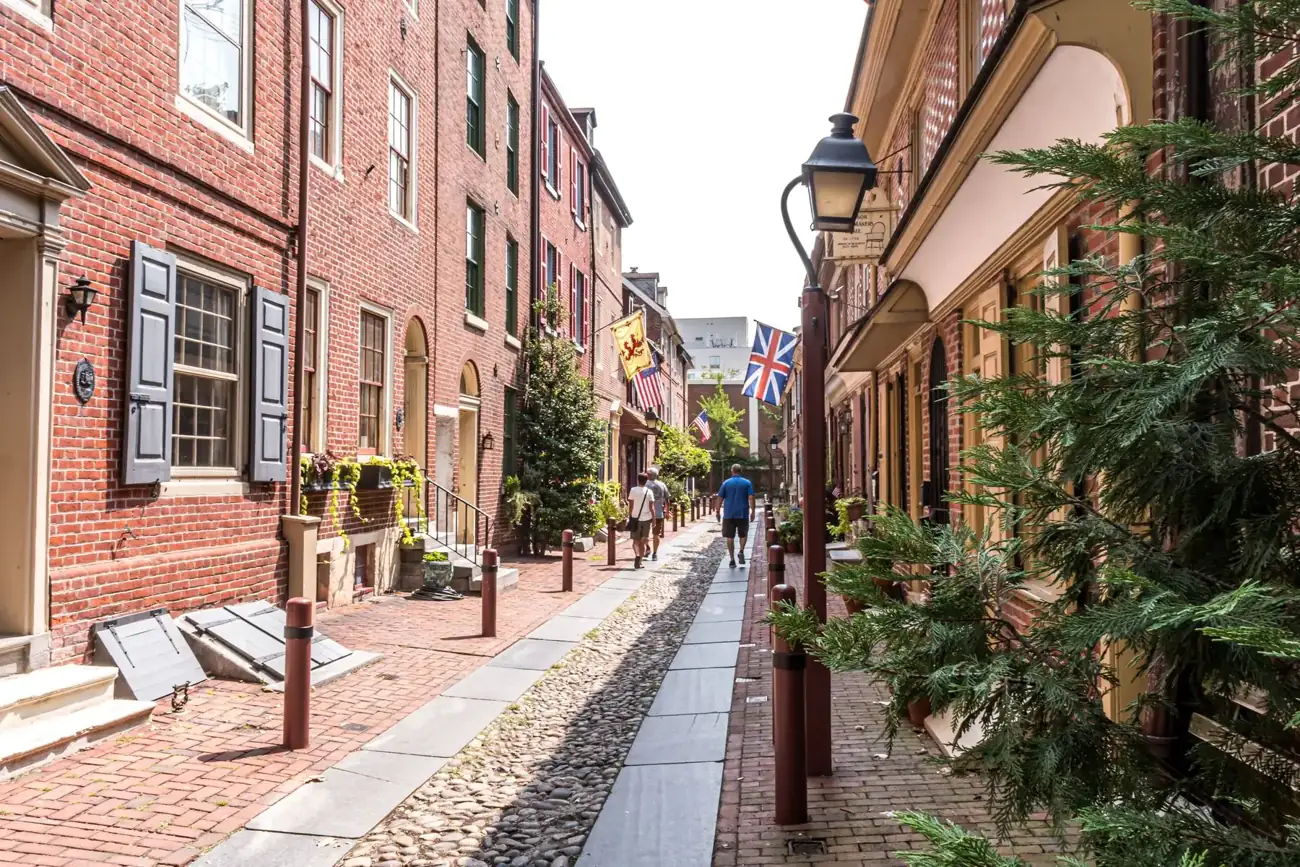 Does my chimney work need Philadelphia Historical Commission approval?On a designated Philadelphia property, chimney pointing counts as an alteration. How staff review works, the mortar sample, and the Diamond Street B-vent rule.
 What chimney and carbon monoxide rules apply when I sell a Philadelphia house?Philadelphia sellers certify smoke and CO alarms in writing. The PA REALTORS® form asks when chimneys were last cleaned. What the law asks and what it doesn't.

Schedule
Choose a morning or an afternoon.
Sunday through Friday, arrival between 8 and 11, 11 and 2, or 2 and 5. The look costs nothing, and a person phones you the day before.