
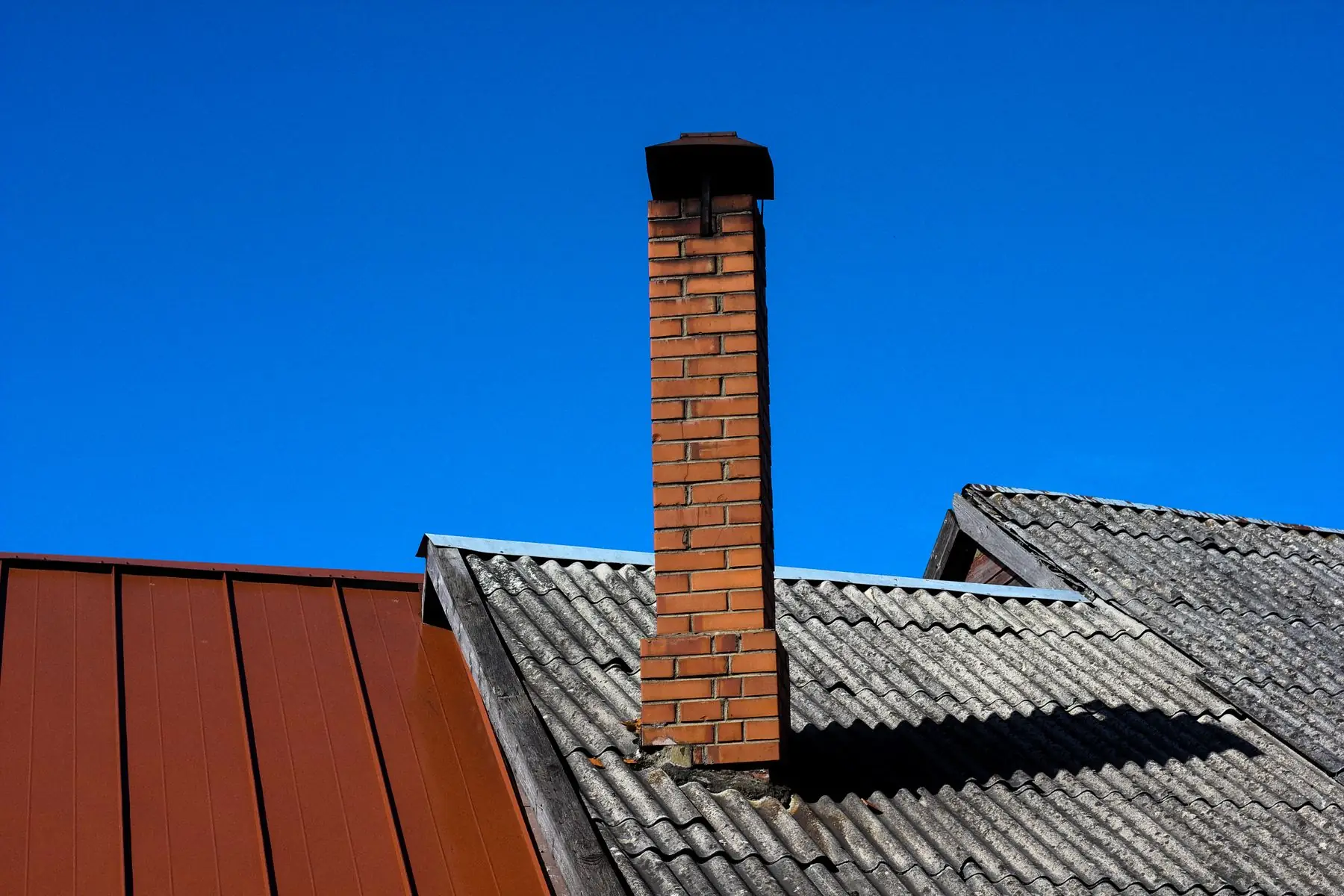
Chimney Liners for Old Flues and New Appliances
The liner is the tile or pipe that actually carries smoke and exhaust inside the brick. When it is cracked, missing or the wrong size, a flexible stainless liner typically runs $900 to $3,800 installed.
Pennsylvania's code is brief on this point. Section R1003.11 of the 2021 International Residential Code, in force statewide since January 2026, reads in full: masonry chimneys shall be lined. Many chimneys here were built before that was standard practice. Four in ten Philadelphia homes predate 1940, and so do more than half the homes in Reading and in Lancaster city, according to the Census. In those houses the flue may be bare brick, a coat of mortar parging, or clay tile that has cracked and shifted over a century of heat and frost.
A liner does three jobs. It keeps heat and sparks away from the wood framing around the chimney, it keeps acidic exhaust off the mortar joints, and it gives smoke a smooth passage of the right size so the draft pulls well. When the original lining fails, or a new stove, insert or furnace needs a different size, relining is usually how a chimney gets back into safe use.
When to call
- Flakes or chunks of clay tile in the firebox or cleanout
- A flashlight or camera view showing cracked or offset tile
- Smoke or odor in a room beside the chimney, or next door
- A new insert, stove or furnace about to be connected
- Water stains or white salt deposits on the chimney indoors
- Gaps between flue tiles visible from the top
The visit, step by step
- Look from the top and the bottomThe free inspection looks down the flue and up from the firebox or cleanout. When something hidden looks likely, we quote a camera scan during that visit.
- Match the liner to the applianceWood, gas and oil each need a suitable material and diameter; the size comes from the appliance and the height of the chimney.
- Install the full heightThe stainless liner runs from the appliance connection to a top plate and cap, insulated where the installation calls for it.
- Test and recordWe check draft with the appliance running and leave you photos and a note of what the flue now serves.
Which liner suits which chimney
Flexible stainless steel does most relining work. It bends around the offsets in an old chimney, comes in the diameters that wood stoves, inserts and gas appliances need, and typically runs $900 to $3,800 installed in 2026, depending on height, diameter and how much prep the old flue needs. HomeGuide's 2026 liner guide puts a stainless liner's service life at roughly 15 to 20 years. Clay tile repair and other lining types are priced at the inspection.
For gas, the 2021 IRC (G2427.5.2) accepts clay tile, a UL 1777 listed liner or another material rated to 1,800°F. Furnace and boiler flues, especially after an oil-to-gas switch, follow their own sizing rules; our furnace flue relining page covers those.
Old Philadelphia flues and multi-flue stacks
Rowhouses, twins and townhouses make up 56 percent of Philadelphia's homes per the Census, and their stacks can hold several flues side by side. The 2021 IRC wants 4 inches or more of masonry separating flues that share a chimney (R1003.13) and says the space around a liner cannot be used to vent another appliance (R1003.12.2). When the brick partition between two flues has crumbled, a liner in each passage separates them again. If one of those flues serves the house next door, we document both sides before anything goes in.
In a historic district, the top of the liner is the part people see. The Historical Commission's Diamond Street manual says metal B-vents sticking out of chimneys are not approved there and recommends terra cotta liners or a metal liner cut below the brick. That is how we finish stainless liners anyway, under a cap, and we help you prepare photos if staff review is needed.
Is there an alternative to relining?
Sometimes. A few cracked tiles near the top can occasionally be replaced on their own. A sound flue that is simply dirty may need nothing more than a sweep. A chimney that will never be used again may only need a cap. Some companies offer ceramic coatings that rebuild the inside of a flue; whether one suits your chimney depends on the damage and the appliance. We lay out the options at the inspection rather than reaching for the largest job.
On permits: installing or swapping an appliance takes a mechanical permit in Philadelphia. For a liner on its own, we check what your city, township or borough requires before we start.
Answers
Chimney Liners & Relining questions
What does a chimney liner actually do?
It contains the heat, smoke and exhaust, protects the brick and nearby framing from them, and sizes the passage so the appliance drafts properly. Current code calls for masonry chimneys to be lined.
How can I tell if my clay flue tiles are cracked?
Tile flakes in the firebox or cleanout are the most common clue, along with smoke or odors in rooms beside the chimney. Cracks often hide between tile joints, so we look from top and bottom and suggest a camera scan only if a hidden defect seems likely.
Do I need a liner for a fireplace insert?
Yes in practice. A wood or gas insert exhausts through a liner that runs from its collar to the chimney top and matches its outlet size. Insert jobs include the liner in the quote.
How long does relining take, and how long does it last?
Most liners go in within a day. HomeGuide's 2026 guide puts stainless liners at roughly 15 to 20 years, depending on the fuel and how well the appliance burns.
Does my chimney need ceramic restoration instead of a liner?
It can suit some flues with scattered cracks and sound overall shape. Badly broken tile, a flue that is the wrong size for the appliance, or an unlined chimney usually points to a stainless liner. We explain which fits at the free inspection.
Same family of jobs
Flues, tops and fireboxes

Schedule
Choose a morning or an afternoon.
Sunday through Friday, arrival between 8 and 11, 11 and 2, or 2 and 5. The look costs nothing, and a person phones you the day before.