
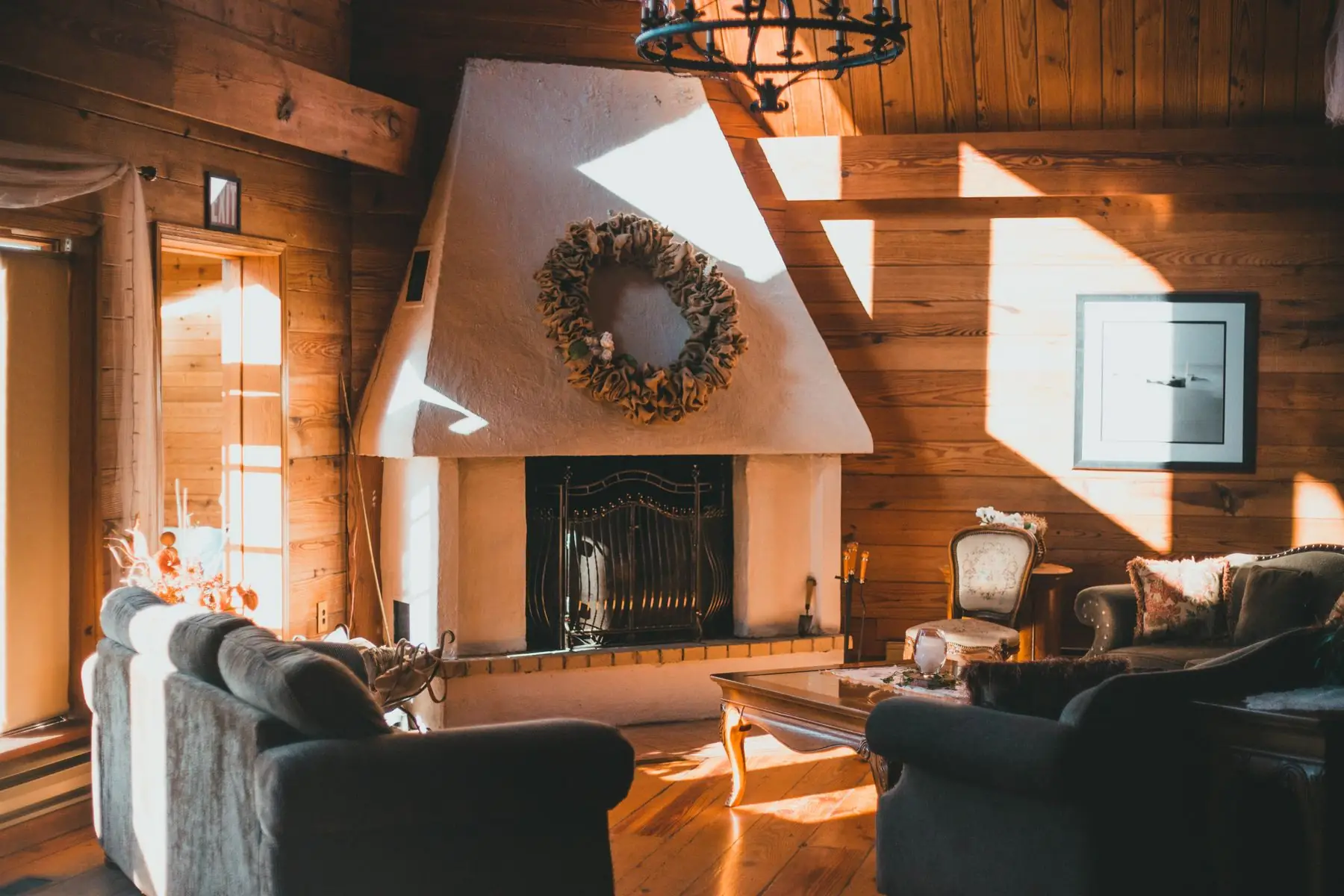
When the Fireplace Pushes Smoke Back Indoors
Finding out why a fireplace smokes costs nothing. Most fixes, from a top-sealing damper to a new cap, typically fall between $140 and $700.
In a rowhouse, a smoky fireplace often has its cause outside the house. A neighbor adds a third floor or a roof deck and suddenly your chimney sits in its shadow, where wind tumbles over the taller wall and pushes smoke back down. Philadelphia's Department of Licenses and Inspections says as much in its training slides: building higher than a chimney next door obstructs airflow and makes that property non-compliant. That situation has its own city rule, which we explain on our rowhouse page.
Inside the house, the usual suspects are a cold flue that will not start drawing, a kitchen or bath fan pulling air down the chimney, a damper rusted half shut, or a flue that is too small for the fireplace opening. Each needs a different fix, so we diagnose first, for free, and put the price of the fix in writing before doing anything.
When to call
- Smoke curls out under the lintel while the fire gets going
- A smoke smell that lingers for days after a fire
- A campfire or tar smell in summer, with no fire at all
- The fire burns fine until the range hood or a bath fan goes on
- The problem began after the house next door was raised
The visit, step by step
- Watch it happenWhere it is safe, we light a small fire or run a smoke test to see where the smoke goes.
- Check height and neighborsWe measure the chimney against the roof and anything within 10 feet.
- Damper, flue and openingWe check the damper, the smoke chamber and whether the flue is sized for the opening.
- A written fixWe explain the cause in plain language and put the repair price on paper.
Height, wind and the house next door
Current code, the 2021 IRC used in Pennsylvania since January 1, 2026, wants the top of a chimney 3 feet or more over its roof penetration, and 2 feet or more higher than any part of a building within 10 feet. Many older rowhouse chimneys barely clear their own roof, and when a neighbor builds up, wind spilling over the new wall can push straight down the flue.
Sometimes a cap with a better shape is enough. Sometimes the chimney has to go taller, which we price at the visit, since the stack and roof decide the cost. If the taller building next door went up recently, read our rowhouse page first: the builder may have owed you an offer to extend your chimney.
Air, fans and tight houses
A fireplace needs air coming in to send smoke out. Range hoods, bath fans, clothes dryers and the furnace all pull air out of the house, and in a small, well-sealed rowhouse the easiest way back in is down the chimney. Open a nearby window an inch while the fire starts; if the smoke behaves, you have your answer. If the smoke stops, the house is short of air.
A cold flue does the same thing on the first fire of a cold day. Warming the flue first, with a burning twist of newspaper held by the open damper for a minute, often gets it pulling.
Dampers, summer smells and shared flues
An old cast-iron throat damper that rusts half shut, or no longer closes tight, causes both smoke in winter and a sooty smell in summer, when warm, humid air settles down the flue. A top-sealing damper, typically $140 to $420 installed, closes at the top of the chimney on a gasket and stops both. A stainless cap, typically $200 to $700, keeps rain off the soot that causes most of the smell.
One more cause we always check: a fireplace sharing a flue with a furnace or boiler. The 2021 IRC does not allow a fireplace to connect to a flue venting another appliance. It still turns up in older houses, and it is a safety problem, not just a smoky one.
Answers
Smoky Fireplace & Draft questions
Why does my house smell like a campfire in summer?
Usually it is damp soot in the flue and warm, humid air sinking down the chimney. A top-sealing damper and a cap fix most cases, and a sweep helps if the flue is dirty.
Should I get a top-mount damper?
If your old damper is rusted, warped or leaks air, a top-sealing damper is a good fix. It seals at the top of the flue, keeps rain and animals out when closed, and typically costs $140 to $420 installed.
Can my fireplace and furnace share one flue?
No. The code Pennsylvania uses does not allow a fireplace or wood stove to connect to a flue that vents another appliance.
The neighbor added a floor and now our fireplace smokes. What can we do?
In Philadelphia, Regulation B-3307.1 requires the builder to give written notice at least 60 days ahead and offer to secure permits and fund or perform the extension. If that moment has passed, call 311 and see our rowhouse page.
How much does fixing a smoky fireplace cost?
Most fixes run $140 to $700. We quote raising a chimney or changing the flue size at the visit, since every stack is different.
Same family of jobs
Sweeping, looking and smoke trouble

Schedule
Choose a morning or an afternoon.
Sunday through Friday, arrival between 8 and 11, 11 and 2, or 2 and 5. The look costs nothing, and a person phones you the day before.